
January 30 - February 3, 2027
San Diego, CA, USA


January 30 - February 3, 2027
San Diego, CA, USA
Drug attrition in clinical trials due to inaccurate preclinical target validation remains one of the greatest challenges facing drug discovery. Drug candidates with adequate pharmacokinetics and safety margins still commonly fail due to lack of efficacy, suggesting that the 'wrong' target has too often been selected as the focus of a therapeutic program. Addressing this demands not only better experimental tools, but a fundamentally smarter approach to how targets are first identified and prioritised.
The 2027 edition of this course brings together two transformative pillars of modern drug discovery: genome editing technologies and artificial intelligence (AI)-driven target discovery. Where previous editions focused primarily on the experimental toolkit, this updated course reflects the rapidly emerging reality in which AI methods, including machine learning, deep learning, large language models, graph neural networks, and generative models are now being used to mine vast multiomics datasets, predict druggability, model disease biology in silico, and systematically prioritise candidate targets long before a CRISPR experiment is ever designed.
Genome editing tools such as CRISPR-Cas9 and targeted protein degradation remain indispensable for experimental target validation, animal model generation, and functional genomics. They provide the empirical ground truth that AI models need to learn from and be validated against. This course presents both approaches as synergistic: AI accelerates and focuses the target identification and prioritisation process, while genome editing provides the rigorous experimental validation that turns a computational prediction into a credible drug discovery program.
Attendees will gain practical knowledge of the state of the art in both domains: the latest AI-based methods for integrating genomics, transcriptomics, proteomics, and biomedical literature to generate and rank target hypotheses; and the step-by-step methodologies for using CRISPR, pooled functional screens, and emerging targeted protein degradation tools to validate those hypotheses in disease-relevant models. The course will also address the critical question of balancing novelty with confidence in target selection - a strategic consideration highlighted in recent literature - as well as the current limitations of AI approaches, including data bias, model interpretability, and the need for robust experimental validation pipelines.
This course is designed for scientists and research leaders who are engaged in or moving towards a more data-driven approach to target identification and validation. It will be of particular value to:
By the end of this course, attendees will be able to:

Scott T. Younger, PhD
Children’s Mercy Research Institute, Children’s Mercy Kansas City
Scott Younger is the Director of Disease Gene Engineering within the Genomic Medicine Center at Children's Mercy Kansas City. His laboratory focuses on dissecting the molecular mechanisms by which rare genetic variants identified in patients at Children's Mercy lead to disease. Younger joined Children's Mercy from the Broad Institute of MIT and Harvard where his group worked on the development of new methodologies to expand the utility of CRISPR-based genetic screens. Prior to working at the Broad Institute he completed his postdoctoral studies at Harvard University as an American Cancer Society Fellow. He holds a PhD in cell and molecular biology from UT Southwestern Medical Center. He also received an MS in biotechnology from the University of Texas at San Antonio and a BSI in bioinformatics from Baylor University.

Samuel A. Hasson, PhD
Voyager Therapeutics
Sam Hasson is currently an Associate Director at Voyager Therapeutics (Cambridge, Massachusetts). A major aim of his work is to develop novel applications of AAV-based gene therapy in the CNS to transform the treatment of unmet medical needs. Prior to joining Voyager in 2020, Hasson led groups within Amgen Neuroscience and Pfizer Neuroscience with a focus on the deconvolution of human disease genetics for drug target selection, employing genome editing technologies to enable this process. As a postdoc, he trained with Richard Youle and Jim Inglese at the National Institutes of Health.
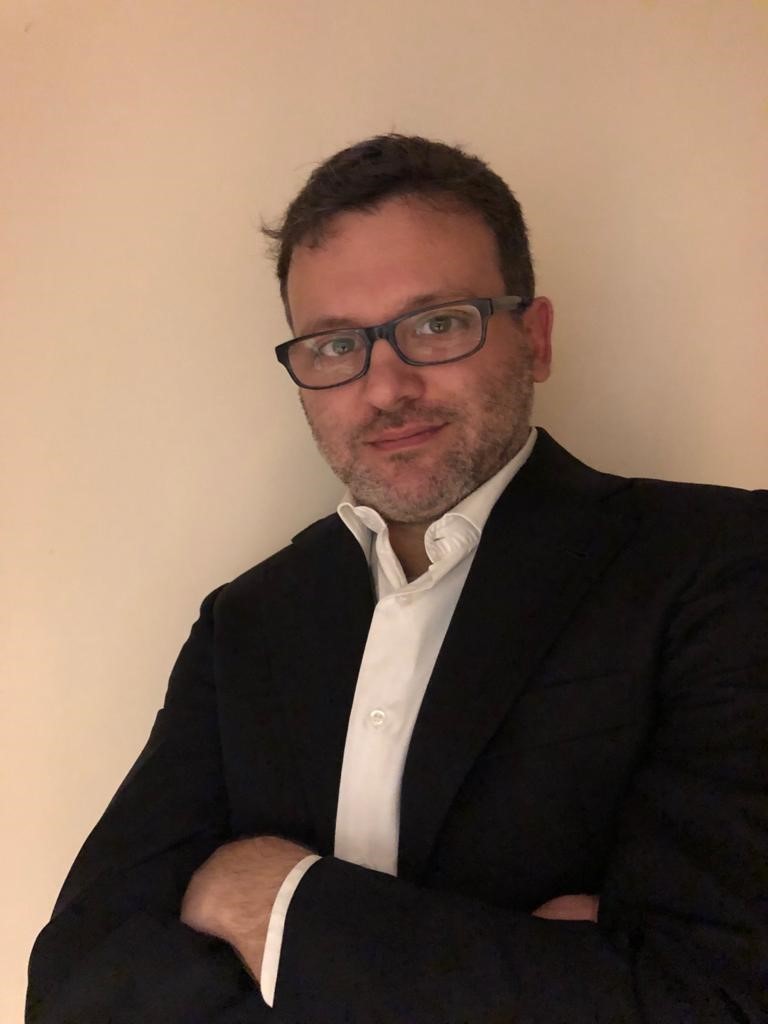
Davide Gianni, PhD
AstraZeneca
Davide Gianni is Senior Director of Functional Genomics at AstraZeneca’s BioPharmaceuticals R&D, where he leads a team of scientists advancing new therapeutic opportunities across key disease areas.
Gianni joined AstraZeneca in 2015 from Boehringer Ingelheim, where he led oncology target discovery efforts. Earlier, he completed postdoctoral research at The Scripps Research Institute, investigating the role of reactive oxygen species in diseases including cancer, neurodegeneration and cardiovascular conditions.
He has authored over 30 publications and co-edited SLAS Discovery’s first Special Issue on Functional Genomics. He plays a key role in AstraZeneca’s external collaborations, including with the Joint MRC-MTI-AZ Functional Genomics Screening Laboratory, the Joint AZ/CRH Functional Genomics Centre and the MRC-funded UK Functional Genomics Initiative.
His work has earned multiple honors, including the Alzheimer’s Association Young Scholar Award, the Boehringer Ingelheim Golden Award, the Discovery Sciences Science Award and the SLAS Discovery Excellence Award.